What is CFD Analysis? Achieving High-Accuracy Engineering Design with Computational Fluid Dynamics
What is CFD (Computational Fluid Dynamics)?


Computational Fluid Dynamics (CFD) is an advanced engineering method used to analyze the behavior of liquids and gases through numerical calculations performed by high-performance computing systems. CFD simulations allow engineers to accurately predict velocity fields, pressure distributions, temperature gradients, turbulence effects, and heat transfer processes before physical testing is performed.
Today, CFD analysis services have become an essential part of product development and validation processes across industries such as defense, aerospace, automotive, energy, marine, and heavy manufacturing.
How is CFD Analysis Performed?
A professional CFD engineering analysis typically consists of the following stages:
1. Geometry Preparation
The CAD model of the product or system is prepared, and the fluid domain is defined.
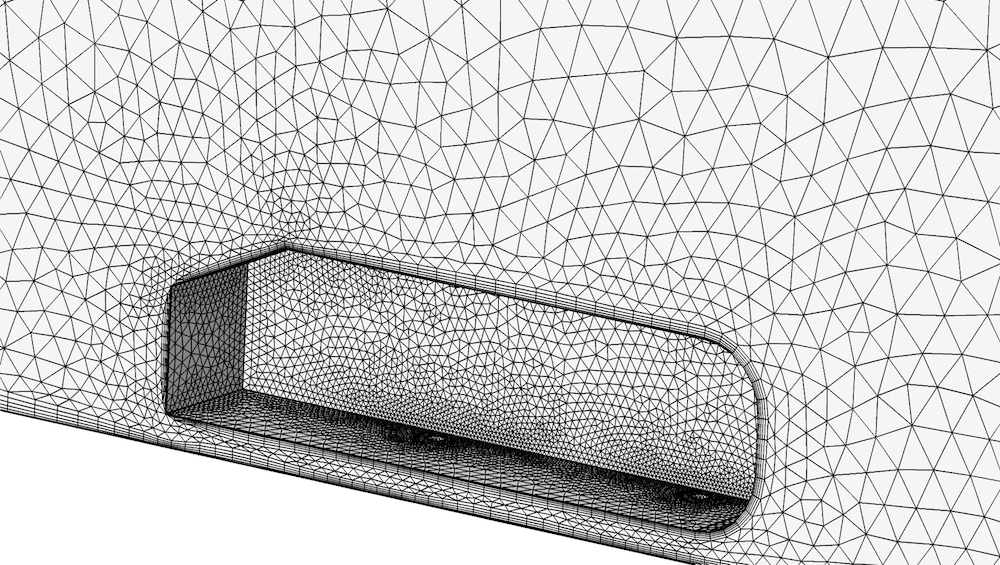
2. Mesh Generation
The geometry is divided into millions of small computational cells to enable numerical solution. Mesh quality is one of the most critical factors directly affecting CFD accuracy.
3. Physics Model Definition
Depending on the analysis requirements, appropriate models are selected:
Turbulence models (k-epsilon, k-omega SST, etc.)
Heat transfer models
Multiphase flow models
Compressible or incompressible flow
Combustion and reaction models
4. Boundary Condition Definition
Inlet velocities, pressure values, temperatures, and environmental conditions are defined.
5. Numerical Solution (Solver)
The Navier–Stokes equations are solved iteratively to compute the fluid flow field.
6. Post-Processing and Evaluation
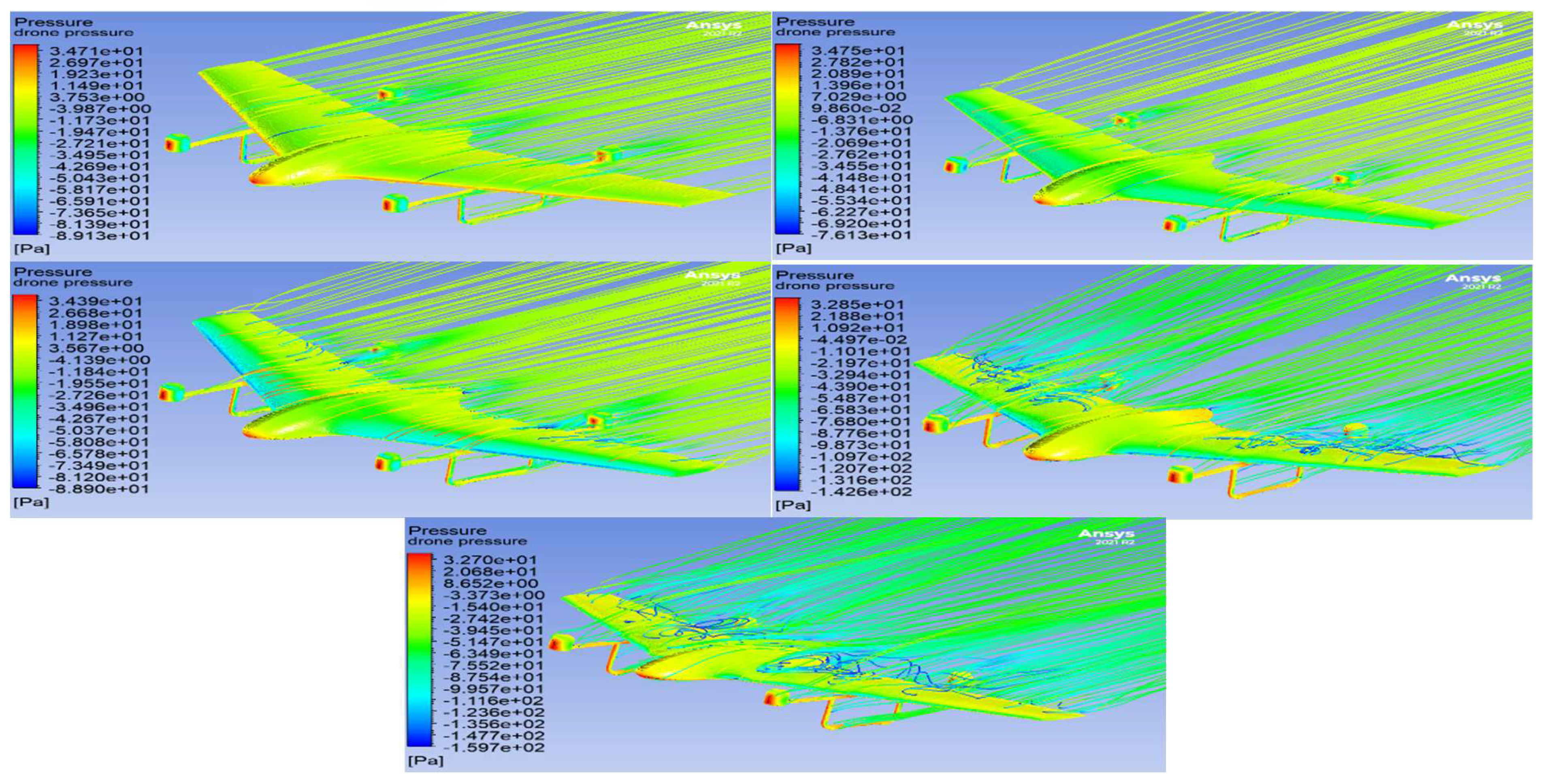
Velocity, pressure, temperature, and force distributions are evaluated to determine system performance.
Industrial Applications of CFD
CFD simulations are widely used across many industries:
Defense Industry
Missile and projectile aerodynamics
Explosion gas dispersion simulations
Naval hydrodynamic performance analysis
Aerospace
Lift and drag optimization
High-Mach aerodynamic simulations
Automotive
Vehicle aerodynamics and fuel efficiency optimization
Engine cooling and combustion simulations
Energy and Industrial Applications
Turbine and pump performance simulations
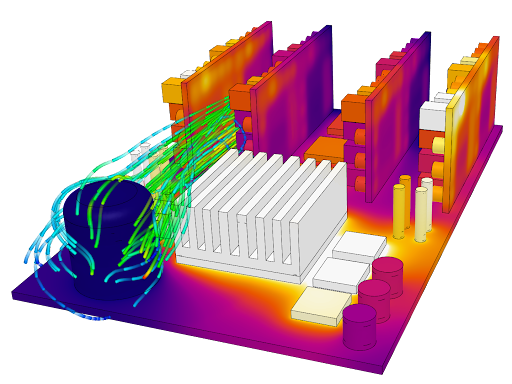
HVAC airflow analysis
Heat exchanger performance evaluation
Engineering Advantages of CFD Analysis
Professional CFD simulations provide significant engineering benefits:
Reduction in prototype costs
Faster design validation cycles
Performance optimization at early design stages
Improved product safety and reliability
Support for certification and compliance processes
For these reasons, CFD engineering services are considered one of the most critical digital validation tools in modern engineering.
FE-TECH Advanced Engineering CFD Solutions
FE-TECH Advanced Engineering delivers high-end CFD simulation services for defense, automotive, rail systems, and heavy industry projects, including:
Aerodynamic analysis
Internal and external flow simulations
Heat transfer analysis
Multiphase flow simulations
Fan, pump, and turbine performance evaluations
Using advanced simulation platforms such as ANSYS Fluent, FETECH ensures accurate, reliable, and optimized engineering solutions for complex industrial applications.
Computational Fluid Dynamics (CFD) plays a vital role in modern engineering design by enabling accurate prediction of fluid behavior and system performance. With proper meshing strategies, validated turbulence models, and expert engineering interpretation, CFD significantly improves product performance while reducing development costs and testing time.
Contact FE-TECH Advanced Engineering to accelerate your design validation process with advanced CFD simulation solutions.